





Will Your Rental Survive Its First Lake-Effect Cold Snap?
Your phone lights up at 2 a.m. in late January. Wrapped in a blanket, your tenant reports a silent furnace and a strange drip coming from the kitchen ceiling. By morning, you are calling an emergency HVAC tech, a plumber, and your insurance agent, all at premium winter rates.
Most Northeast Ohio winter disasters do not start in January. They start in October, with a gutter nobody cleaned, a hose nobody disconnected, or a furnace nobody checked. Lake Erie simply finishes the job.
This checklist shows you exactly what to inspect, service, and communicate before the first hard freeze, so your rental stays warm, your tenants stay happy, and your winter stays refreshingly quiet.
Key Takeaways
Here is what every Northeast Ohio landlord should carry into winter:
Service heat early: A fall furnace or boiler tune-up costs far less than an emergency no-heat call in January.
Protect the water lines: Pipes along exterior walls, crawl spaces, and garages are the most likely to freeze and burst.
Treat vacancies differently: Empty units need heat, regular walk-throughs, and a documented plan to avoid hidden damage.
Communicate before the cold: Clear tenant instructions prevent most winter emergencies before they start.
Numbers That Keep Your Rental Covered This Winter |
11 years: Haven Group's property management experience in Northeast Ohio |
1,700+ homes: Homes our team has worked with for owners and residents |
55°F: Minimum thermostat setting the American Red Cross recommends when a home sits empty in cold weather |
24 hours: Notice presumed reasonable before landlord entry under Ohio Revised Code 5321.04(A)(8) |
30 days: Outer limit to fix a reported condition after written tenant notice under Ohio Revised Code 5321.07 |
IN THIS GUIDE
Why Winter Hits Northeast Ohio Rentals So Hard
Exterior Checklist: Seal the Shell Before the First Hard Freeze
Interior Checklist: Heat, Water, and Safety Systems
Vacant Units Need Their Own Winter Plan
Tenant Communication: Your Cheapest Winterization Tool
Why Winter Hits Northeast Ohio Rentals So Hard
Winter in this region is less about one big storm and more about months of steady stress on your property.
Lake-effect bands can bury one suburb while the next town over sees flurries, which is why the National Weather Service Cleveland office is worth bookmarking for winter alerts.
Repeated freeze-thaw cycles also work water into roofs, masonry, and concrete. Much of the rental stock across Cuyahoga and Summit counties is older, with original plumbing, aging boilers, and minimal insulation.
There is a legal layer, too. Ohio Revised Code 5321.04 requires landlords to supply reasonable heat and running water at all times, with limited exceptions for tenant-controlled utility setups. A failed furnace in February is a repair, a habitability issue, and a tenant-retention problem all at once.
Exterior Checklist: Seal the Shell Before the First Hard Freeze
Start outside, because the building envelope is your first line of defense against snow, ice, and meltwater.
Roof, Gutters, and Downspouts
Clear gutters after the leaves finish dropping, not before. Clogged gutters hold water that freezes into ice dams, which push meltwater under shingles and into ceilings.
Check flashing around chimneys and vents, replace missing shingles, and extend downspouts at least a few feet from the foundation.
Hose Bibs, Foundations, and Crawl Spaces
Shut off and drain exterior faucets, then disconnect every garden hose. Seal foundation cracks and close crawl space vents where appropriate to prevent cold air from reaching exposed supply lines.
Walkways, Steps, and Snow Plans
Repair loose railings and cracked steps before they are hidden under ice. Your lease should spell out who handles snow and salt, and multi-unit buildings need a reliable removal vendor lined up before the first storm.
A tight exterior keeps most winter problems from ever reaching the inside of your rental.
Interior Checklist: Heat, Water, and Safety Systems
Once the shell is sealed, focus on the systems tenants rely on every single day of winter.
Furnace and Boiler Service
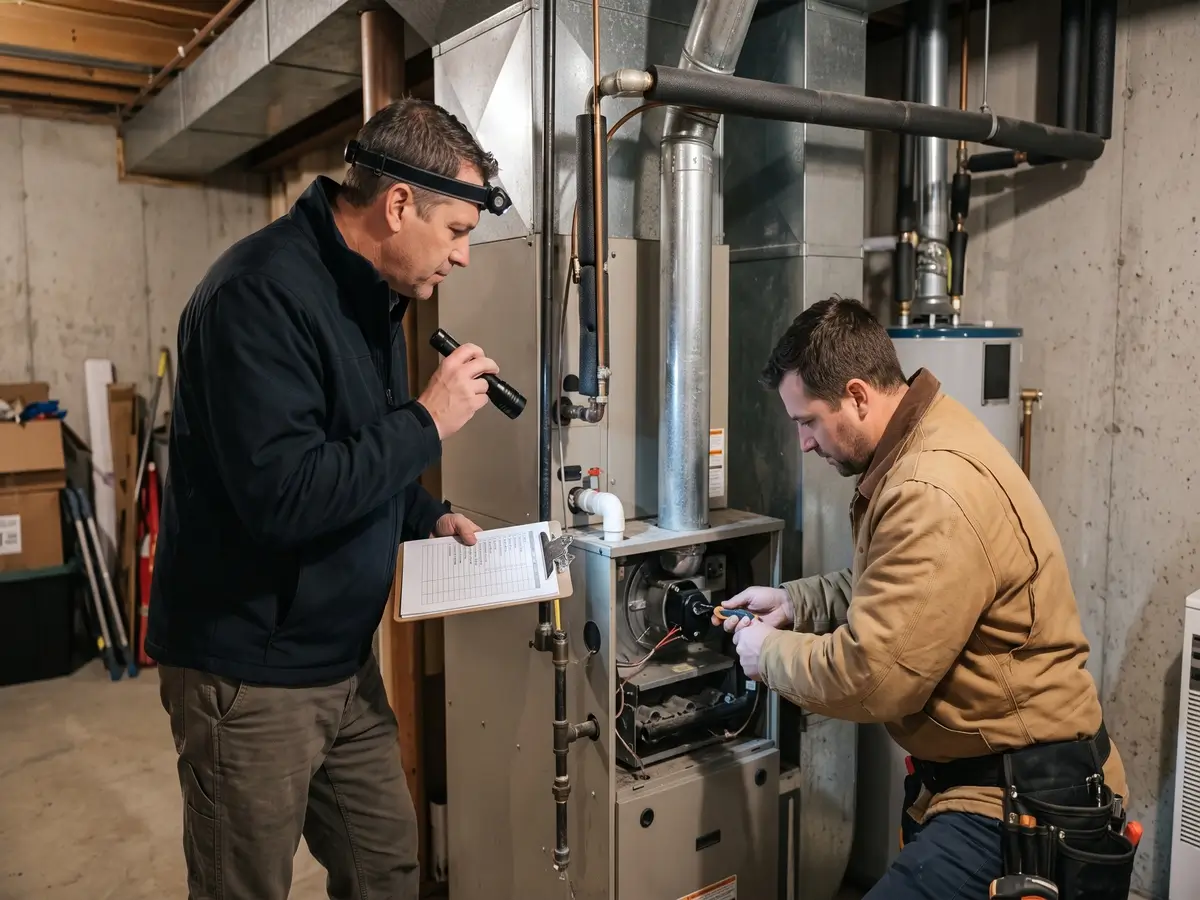
Schedule a licensed HVAC inspection in early fall, when technicians still have open calendars. Replace filters, test the thermostat, and confirm the heat exchanger is sound. Give tenants a filter schedule so the system doesn't choke by February.
Pipes in Cold Zones
Insulate pipes along exterior walls, in unheated basements, and near garages. Make sure tenants know where the main water shutoff is located. We cover the highest-risk spots in more detail in our guide to preventing frozen pipes.
Smoke and Carbon Monoxide Detectors
Closed windows and running furnaces increase the risk of carbon monoxide poisoning. The U.S. Consumer Product Safety Commission recommends CO alarms on every level of the home and outside sleeping areas. Test every detector, replace batteries, and swap out units past their expiration date.
Healthy heating, protected plumbing, and working detectors cover the biggest winter risks inside the unit, especially when they are part of a proactive maintenance routine rather than a once-a-year scramble.
Vacant Units Need Their Own Winter Plan
An empty rental is the most vulnerable property you own in January, because no one is there to notice a problem.
Keep the heat on. The American Red Cross recommends setting the thermostat no lower than 55°F when a home is unoccupied in cold weather.
Schedule walk-throughs. A weekly check catches a dripping line before it becomes a collapsed ceiling.
Consider a full winterization. If a unit will sit empty for months, draining the plumbing system may be safer than relying on heat alone.
Review your insurance. Many policies limit coverage for vacant properties, so confirm your terms before winter.
The best protection is a shorter vacancy, and creative leasing strategies can help fill units faster in the slow season. Our vacancy loss calculator shows what an empty unit is really costing you each month.
Tenant Communication: Your Cheapest Winterization Tool
Your tenants are your eyes inside the property, so a short winter memo can prevent more damage than any single repair.
Send a reminder in October covering thermostat expectations, how to drip faucets during extreme cold, where the water shutoff is, and how to report problems fast. A clear tenant portal makes those reports quick and traceable.
Plan inspections with Ohio law in mind. Under ORC 5321.04(A)(8), 24 hours is presumed reasonable notice before non-emergency entry.
Once a tenant gives written notice of a problem, ORC 5321.07 generally gives landlords a reasonable time, and no more than 30 days, to fix it, though some small landlords are exempt.
The cheapest winter repair is the one you schedule before the first freeze.
FAQs about Northeast Ohio Rental Winterization
When should Northeast Ohio landlords start winterizing?
Aim to finish exterior work and furnace service by late October or early November. Waiting until the first hard freeze means competing with every other owner for vendors.
Who pays for frozen pipe damage in a rental?
It depends on the cause, the lease terms, and your insurance policy. Tenant negligence, such as turning off the heat, may shift responsibility, so documentation matters.
Should I turn off the water in a vacant rental?
For long vacancies, draining the system is often the safest option. For short gaps between tenants, keeping the heat on and scheduling regular checks usually works.
Do I have to provide heat if my tenant pays the gas bill?
Ohio law provides exceptions for tenant-controlled utility connections, but the heating equipment you supply must still function properly. Reviewing your lease with a qualified professional can clarify your specific situation.
Prepare in October, Relax in January
A warm, dry rental in February is almost always the result of decisions made in October.
Winterizing a Northeast Ohio rental is a checklist, not a guessing game. Seal the exterior, service the heat, protect the plumbing, plan for vacancies, and keep tenants informed. Each step protects your cash flow and your tenant relationships when the weather turns hardest.
Skip one, and winter has a way of finding it, usually at the worst possible hour and the highest possible price.
At Haven Group Property Management, we handle that checklist for owners across Cleveland, Akron, Bedford Heights, and the surrounding suburbs. Our team coordinates seasonal maintenance, inspections, vendor scheduling, and tenant communication so small issues never become midnight emergencies, and you get clear updates instead of surprise invoices.
Explore our Cleveland property management services, or call us at 216-586-2489 to discuss your rental's winter plan before the first freeze arrives.
